
'/%3E%3C/svg%3E)
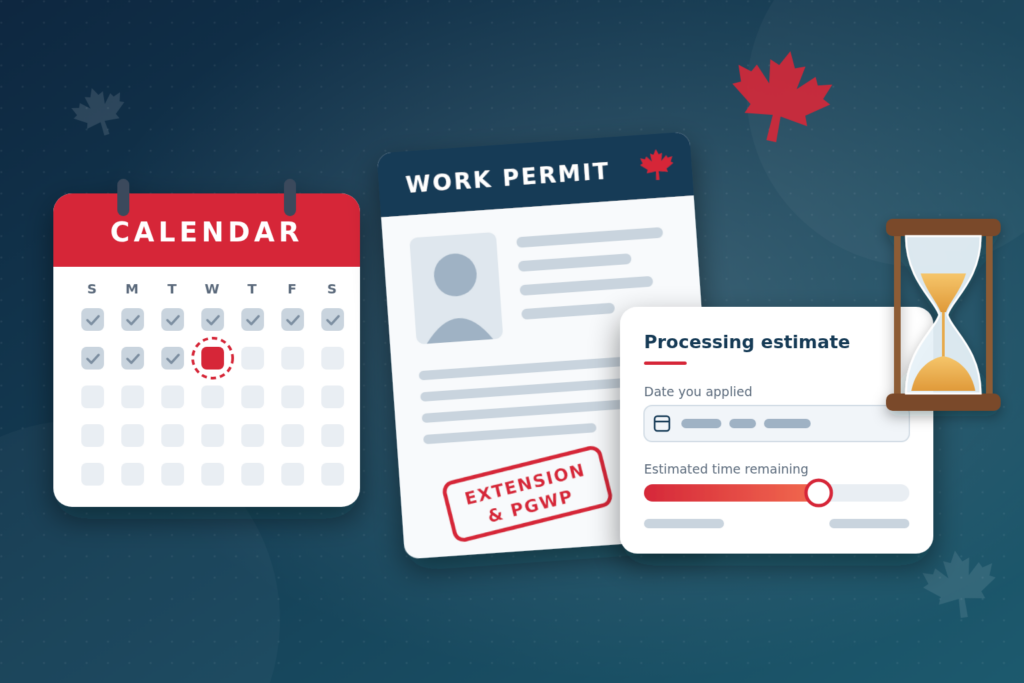
Workers in Canada who are waiting on a work permit extension, and international graduates waiting on a post-graduation work permit (PGWP), now have a clearer way to check where their file stands.
Immigration, Refugees and Citizenship Canada (IRCC) has updated its online processing times tool so these applicants can enter the date they applied and receive an estimate of the time remaining on their own application. The IRCC processing times page was updated on September 24, 2026.
Until now, in-Canada work permit applicants could only see one general estimate: how long a brand-new application might take if submitted that day. That figure was often not very useful for someone who had applied months earlier.
What has changed?
On the processing times page, applicants who choose Temporary residence now see a separate option called Work permit extension in Canada.
After selecting it, the tool asks whether you have already applied:
- Yes: you enter your application date and receive an estimate of the weeks remaining on your file;
- No: you see how long a new application would likely take if submitted now.
The tool also gives a sense of the queue, including how many applications are ahead of yours and how many are waiting for a decision overall. In late September 2026, more than 200,000 applications in this category were pending.
The older Work permit in Canada option is still on the page, but it now covers people applying from inside Canada for their first work permit, other than PGWP applicants.
Who can use the new estimate?
The application-date estimate is designed for people already in Canada who are:
- extending a work permit they currently hold;
- applying to change the conditions of their current work permit;
- international graduates applying for their first PGWP.
It does not cover applicants outside Canada. People applying from abroad should continue to use the Work permit (from outside Canada) option, which shows estimates by country of residence.
How should you read the estimate?
The new figure is a forecast, not a promise. IRCC states clearly that its processing times are neither a maximum nor a guarantee.
For temporary residence applications, IRCC says it refreshes these forward-looking estimates every week. They are based on the number of files in the queue and how many the department expects to finalize going forward. Your estimate can therefore get shorter, but it can also get longer.
Your own file may take more time if, for example:
- the application was incomplete when submitted;
- IRCC needs to verify documents or request more information;
- a medical, security or admissibility issue needs further review;
- you are slow to respond to a request from IRCC.
Waiting past your permit’s expiry date: maintained status
A long processing time does not automatically mean you have to stop working.
If you apply to extend your work permit before your current permit expires and you stay in Canada, you generally keep maintained status (previously called implied status). This lets you keep working under the conditions of your existing permit until IRCC decides on your new application.
Timing is critical. If your permit expires before you apply, maintained status does not apply, and the options left to you are more limited and more complicated. Leaving Canada while waiting can also affect your ability to keep working.
A note for provincial nominees
Many Provincial Nominee Program (PNP) candidates in Canada are juggling an expiring work permit and a pending permanent residence application at the same time.
Under a temporary IRCC measure in effect from June 9 to December 31, 2026, eligible provincial nominees in Canada may apply for a bridging open work permit or certain employer-specific work permits before receiving the acknowledgement of receipt (AOR) on their PR application. Eligible spouses may also benefit. Outside this window, the AOR is normally required first.
If you are a nominee, the new processing estimate can help you judge whether to extend your current permit, apply for a bridging permit, or both, before the December 31 deadline.
What should applicants do now?
A practical approach is to:
- check your personalized estimate using your exact application date;
- compare it with your permit expiry date and any job offer or contract deadlines;
- keep your IRCC account and contact details up to date;
- answer any IRCC request for documents or biometrics quickly;
- avoid travelling outside Canada while relying on maintained status, unless you have received advice first;
- if you are a PNP candidate, review whether the temporary bridging permit measure applies to you before December 31, 2026.
Be careful of false promises
The processing estimate is set by IRCC and applies to everyone in the same queue. No consultant, lawyer or agent can move your file ahead of others or guarantee a decision date. Be cautious of anyone who claims they can.
Final note
IRCC’s new application-date estimates give in-Canada workers and PGWP applicants a more realistic picture of how long they may still need to wait. The numbers will move from week to week, so they are best used as a planning guide rather than a firm date.
The bigger risks remain the same: applying late, submitting an incomplete file, or losing track of your permit’s expiry date.
Waiting on a work permit extension, a PGWP, or a provincial nomination?
Contact Nextland Immigration to review your timeline and options.
This article is for general information only and is not legal advice. Immigration rules change often; please confirm current requirements with IRCC or a licensed professional before applying.
