
'/%3E%3C/svg%3E)
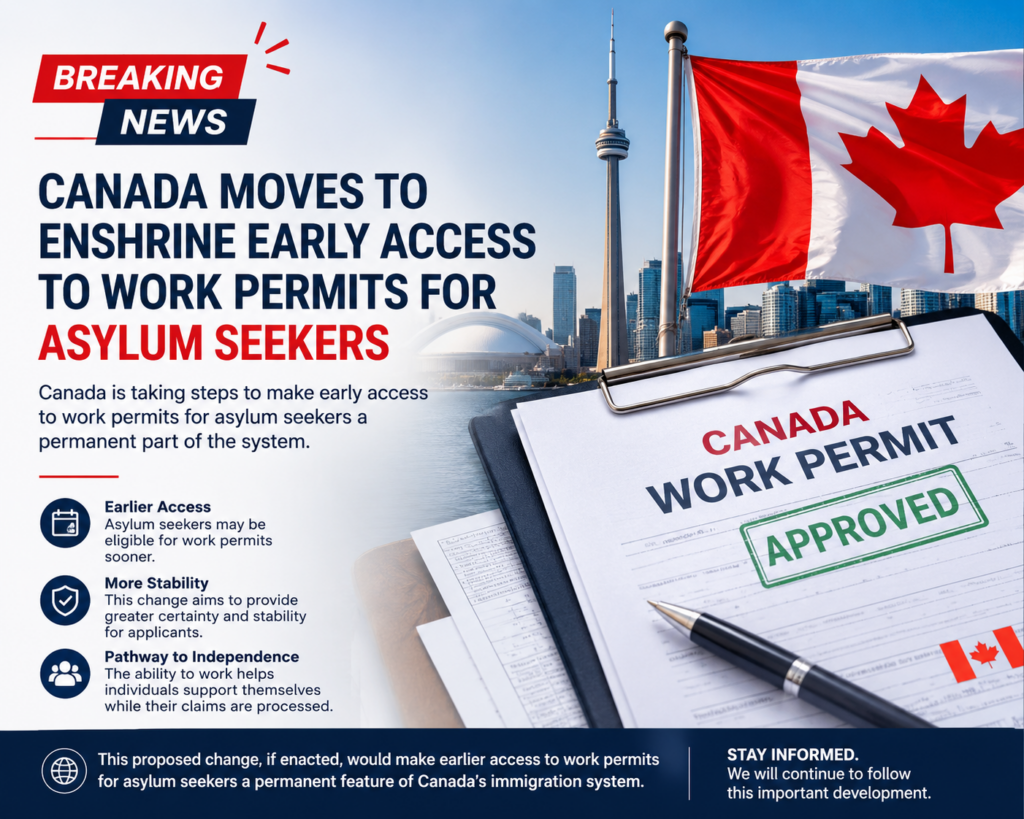
Canada has proposed regulatory changes that could make earlier access to work permits a permanent part of the asylum process.
This is important because many asylum claimants need legal authorization to work while they wait for their refugee claim to move forward. Without a work permit, people may face financial pressure, difficulty supporting their families, and greater dependence on social assistance.
What is changing?
The proposed changes would help eligible asylum claimants access work permits sooner in the process.
Under the current regular framework, a refugee claimant’s work permit eligibility has generally been tied to the referral of their claim to the Refugee Protection Division. Since 2022, Canada has used a temporary public policy to allow some eligible claimants to receive work permits earlier.
The new proposal would move this earlier-access approach into the regulations, making it more stable than a temporary public policy.
Why this matters
Temporary public policies can be changed or cancelled. Regulations provide a more permanent and predictable framework.
For asylum claimants, this may mean:
- earlier ability to work legally in Canada;
- better ability to support themselves and their families;
- less uncertainty during the early stages of the claim process;
- reduced pressure on community and government supports.
This does not mean that every asylum claimant will automatically receive a work permit. Eligibility, documentation, biometrics, medical requirements, and other admissibility issues may still matter.
The proposal is not final yet
This is a proposed regulatory change. The Government of Canada has opened a consultation period, and final rules may still change before they come into force.
For now, asylum claimants should avoid assuming that the new rules are already fully implemented. The details matter, especially timing, eligibility, and how IRCC will apply the rules in practice.
What asylum claimants should do
If you are making a refugee claim in Canada or waiting for your claim to move forward, you should carefully check:
- whether your claim has been found eligible;
- whether you have submitted the required information and documents;
- whether you have completed biometrics;
- whether a medical exam is required;
- whether you are eligible to apply for an open work permit;
- whether your application should be submitted now or after further steps.
A work permit can make a major difference, but a weak or incomplete application can create delays.
Final note
This proposed change is positive for many eligible asylum claimants, but it should not be misunderstood as automatic approval.
If you are unsure whether you qualify for a work permit as an asylum claimant, get advice before applying.
